POLYU SCHOOL OF DESIGN / SD2112 / WEEK 12
Can a machine
originate a design?
Course recap and discussion / ESFQ at 12:30
POLYU SCHOOL OF DESIGN / SD2112 / WEEK 12
Can a machine
originate a design?
Course recap and discussion / ESFQ at 12:30
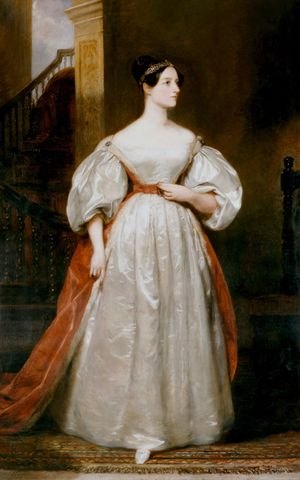
"The Analytical Engine has no pretensions whatever to originate anything. It can do whatever we know how to order it to perform."
Ada Lovelace, Note G, 1843 — the first published program, for a machine that was never built
SD2112 · AI IN DESIGN · WEEK 12
02
WEEKS 1-3 / CONCEPTS, MEDIATION AND AI PARADIGMS
Write the rule, or show the examples.
Machine A: symbolic AI, 1956 onwards — definitions, logic, expert systems. Machine B: machine learning, 1958 / 1986 / 2012 — statistics over examples.
SD2112 · AI IN DESIGN · WEEK 12
03

GIO’S COURSE EXTENSION · MACHINE A / MACHINE B / A+B
Same request. Different machines.
THE REQUEST: “TWO CIRCLES”
MACHINE A · EXPLICIT INSTRUCTIONS
MACHINE B · LEARNED INTERPRETATION
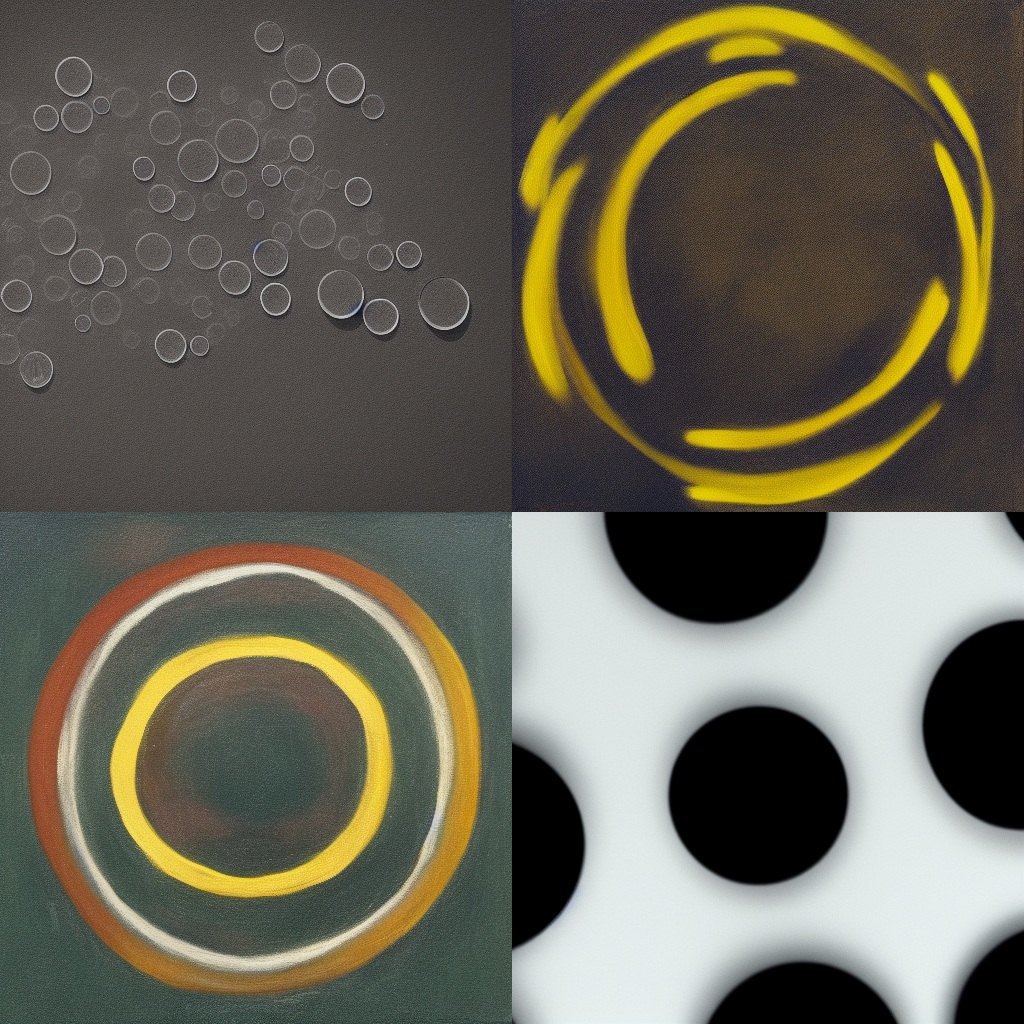
circle(200, 300, 150);
circle(400, 200, 250);
Historical Stable Diffusion samples.
Appearance suggested; count not enforced.
A+B: code sets the boundary; generated pixels supply the surface.
SD2112 · AI IN DESIGN · WEEK 12
04
05 · HUMANS + CONCEPTS · MACHINES + CONCEPTS
Two theories. Two machines.
Rule-based: classical theory + GOFAI, a definition a machine applies. Adaptive: prototype theory + connectionism, examples held in weights nobody can read. Your reflection is about this distinction.
SD2112 · AI IN DESIGN · WEEK 12
05
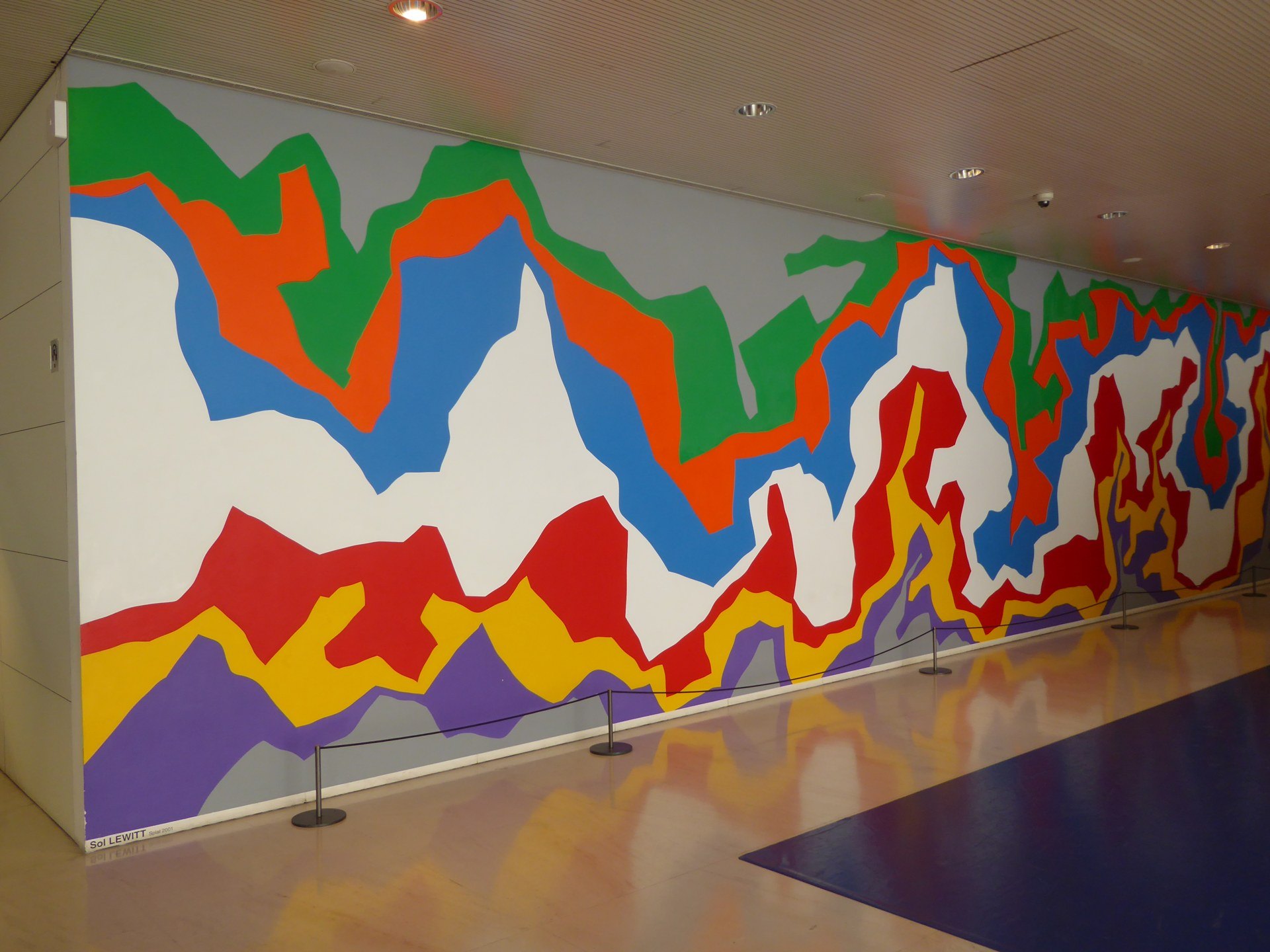
03 · SOL LEWITT · SPLAT · 2001 · CAIXAFORUM BARCELONA
A wall drawing: LeWitt wrote the instruction and signed a certificate; assistants drew it on this wall, and can draw it again on any other. Photo: Ardfern, 2014, CC BY-SA 3.0, Wikimedia Commons.
04 · GEORG NEES · SCHOTTER · c. 1968
One rule. One random number.
Twelve columns, twenty-two rows of squares. Each square is moved and turned by a random amount, and the amount grows with the row.
Row 0: a perfect grid. Row 21: gravel. Schotter means gravel.
The rule decides everything except two numbers per square. Chance is kept on a leash; the picture is order turning into disorder.
The sliders are the rule's two numbers: how much disorder, how many rows.
After Nees: our execution of his rule. Siemens 4004, ALGOL, Zuse Graphomat; the original print is 28 × 22 cm.
SD2112 · AI IN DESIGN · WEEK 12
07
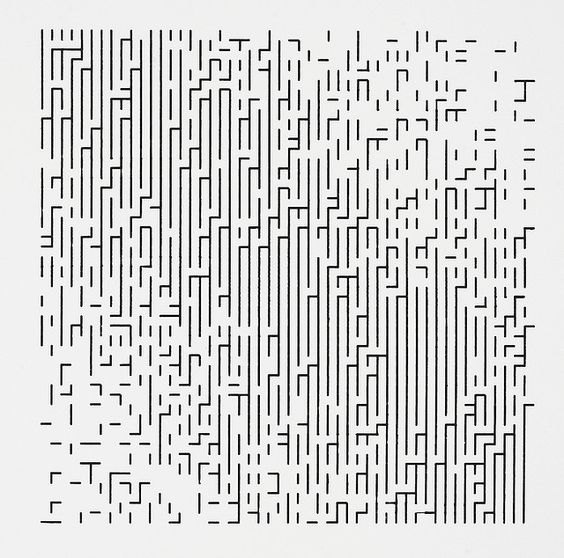
04 · FRIEDER NAKE · WALK-THROUGH-RASTER · SERIES 2, 1–4 · 1966
Look first. What repeats? What never happens? Four prints from one program: ALGOL 60 on a Zuse Graphomat Z64. Victoria and Albert Museum, E.955-2008.
04 · WALK-THROUGH-RASTER · THE RULE IN FOUR STEPS
Four states. The cell above decides.
A grid, drawn column by column, top to bottom. Every cell is one of four things: empty, a bar, a cap, or both (10 PRINT had two). Two rules decide: a bar is more likely near the diagonal, and a cap can only be drawn under an empty cell, so a cell remembers one thing about the one above it. The empty space flows up and to the right, and every field of caps has gaps.
Nake, Walk-Through-Raster, series 2.1–4, 1966. Our reading of his rule: two yes/no decisions per cell, and one fact carried from the cell above.
SD2112 · AI IN DESIGN · WEEK 12
09
02 · THE CLASSICAL THEORY · ARISTOTLE TO THE DICTIONARY
Classical theory of concepts
A definition is a list of properties a thing must have to belong: necessary, and together sufficient. Bachelor = man + unmarried.
Categorising is then trivial: check each property, apply the concept. X is a bachelor if X is a man and X is unmarried. A machine can do that.
New ideas by assembly: put definitions together and you have a new one. Kant: analytic, all in the words.
Aristotle, pointing down at the things, is this theory: sort them by the properties they share and keep the ones that are necessary. Plato, pointing up, disagrees.
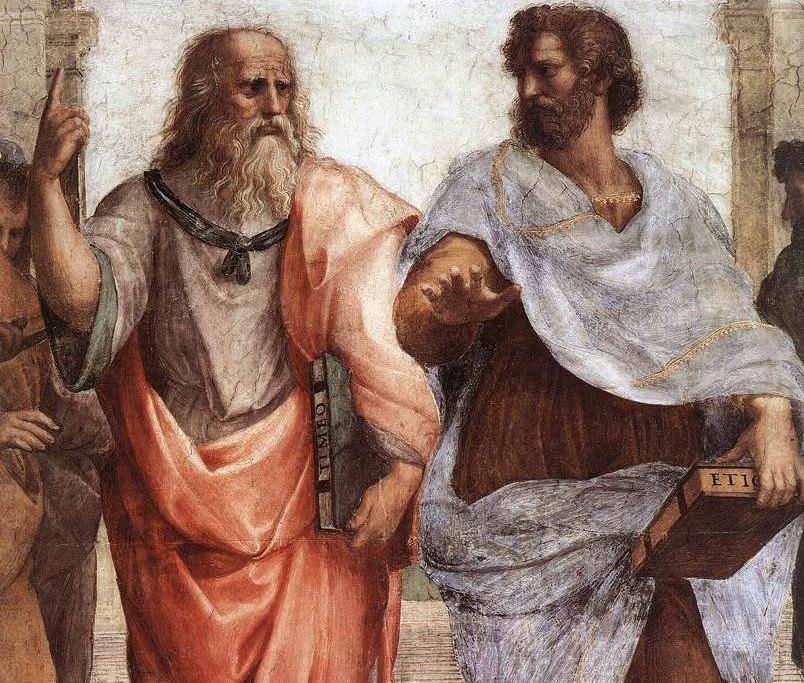
Plato and Aristotle, detail of Raphael's The School of Athens, 1509–1511. Public domain, Wikimedia Commons.
SD2112 · AI IN DESIGN · WEEK 12
10
03 · PROTOTYPE THEORY
Prototype theory
THE THEORY
A structured representation of what members tend to have.
Not a list of conditions but a picture of the typical case, and a distance from it. Membership is a degree: a robin is a very good bird, a penguin a poor one, and neither needs a definition.
THE GAIN
Only similarity is needed.
No definition to write: you judge a new thing by how much it resembles what you have seen. That is learning from examples, and it is why a machine can hold "chair" with no rule for it.
THE COST
Outliers, and combinations.
Exceptions are hard: there are fewer examples at the edge, so the edge is unsure. And combining concepts is a puzzle: which properties of "pet" and "fish" does "pet fish" keep?
SD2112 · AI IN DESIGN · WEEK 12
11
04 · ONE NEURON
A neuron is a weighted vote.
Two inputs, two weights, a bias, a threshold. Multiply, add, compare with zero: that is the whole unit. Three numbers hold everything it knows. Rosenblatt, 1958, called it a perceptron; the shape and the size are the week-1 cup.
Rosenblatt, "The perceptron: a probabilistic model for information storage and organization in the brain", Psychological Review 65, 1958. In the html deck the neuron learns live, one example at a time.
SD2112 · AI IN DESIGN · WEEK 12
12
05 · GEOFFREY HINTON
Fifty years betting on the brain.
A psychologist, like Rosenblatt. 1986: backpropagation, with Rumelhart and Williams, when almost nobody believed in networks.
Connectionism: a concept is a pattern of activity over many units, never a list. Rosch's graded categories as an engineering brief.
2012: with his students Krizhevsky and Sutskever, AlexNet wins ImageNet. 2018: the Turing Award. 2023: leaves Google to speak about the risks.
2024: the Nobel Prize in Physics, with John Hopfield, "for foundational discoveries and inventions that enable machine learning with artificial neural networks".
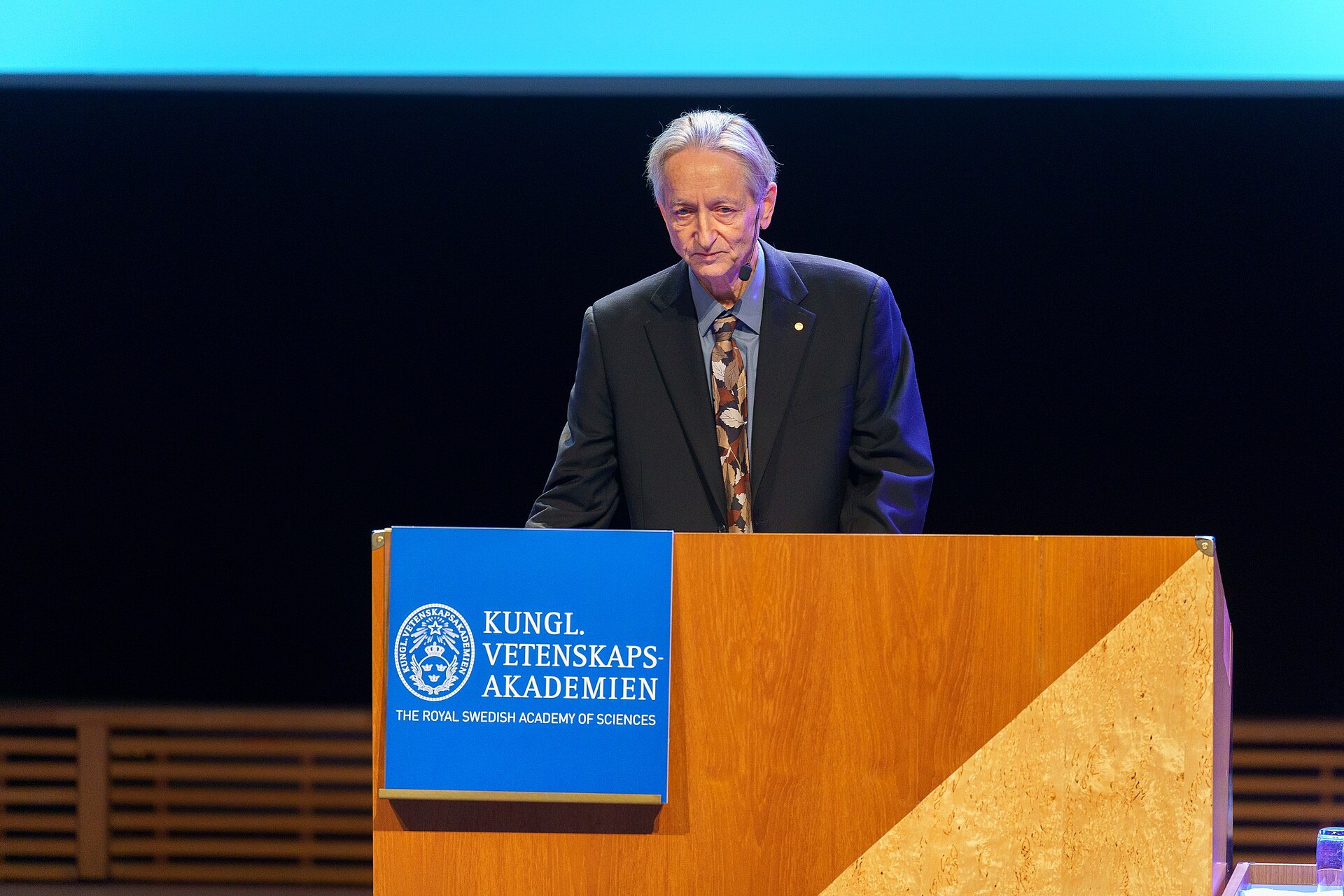
Geoffrey Hinton at the 2024 Nobel Lectures, Stockholm University. Photo: Jay Dixit, CC BY-SA 4.0, Wikimedia Commons.
SD2112 · AI IN DESIGN · WEEK 12
13
05 · BACKPROPAGATION · 1986 · THE PICTURE, LIVE
The guess goes forward. The error comes back.
Nine pixels in, five and three hidden units, two out: nineteen units, 66 weights. Rumelhart, Hinton & Williams, "Learning representations by back-propagating errors", Nature 323, 1986.
SD2112 · AI IN DESIGN · WEEK 12
14
06 · GPUS · NOT ONLY FOR GAMING
The chips made for games.
A graphics processing unit does the same small calculation on millions of pixels at once: textures, shading, vertices, physics. Games needed that, and paid for twenty years of it.
2007: CUDA. NVIDIA opens the chip to any calculation that has the same shape: many small identical jobs, no waiting.
A neural network is exactly that shape: multiply, add, everywhere, at once. What a CPU did in weeks, a graphics card did in days.
The other school of AI finally had its engine.
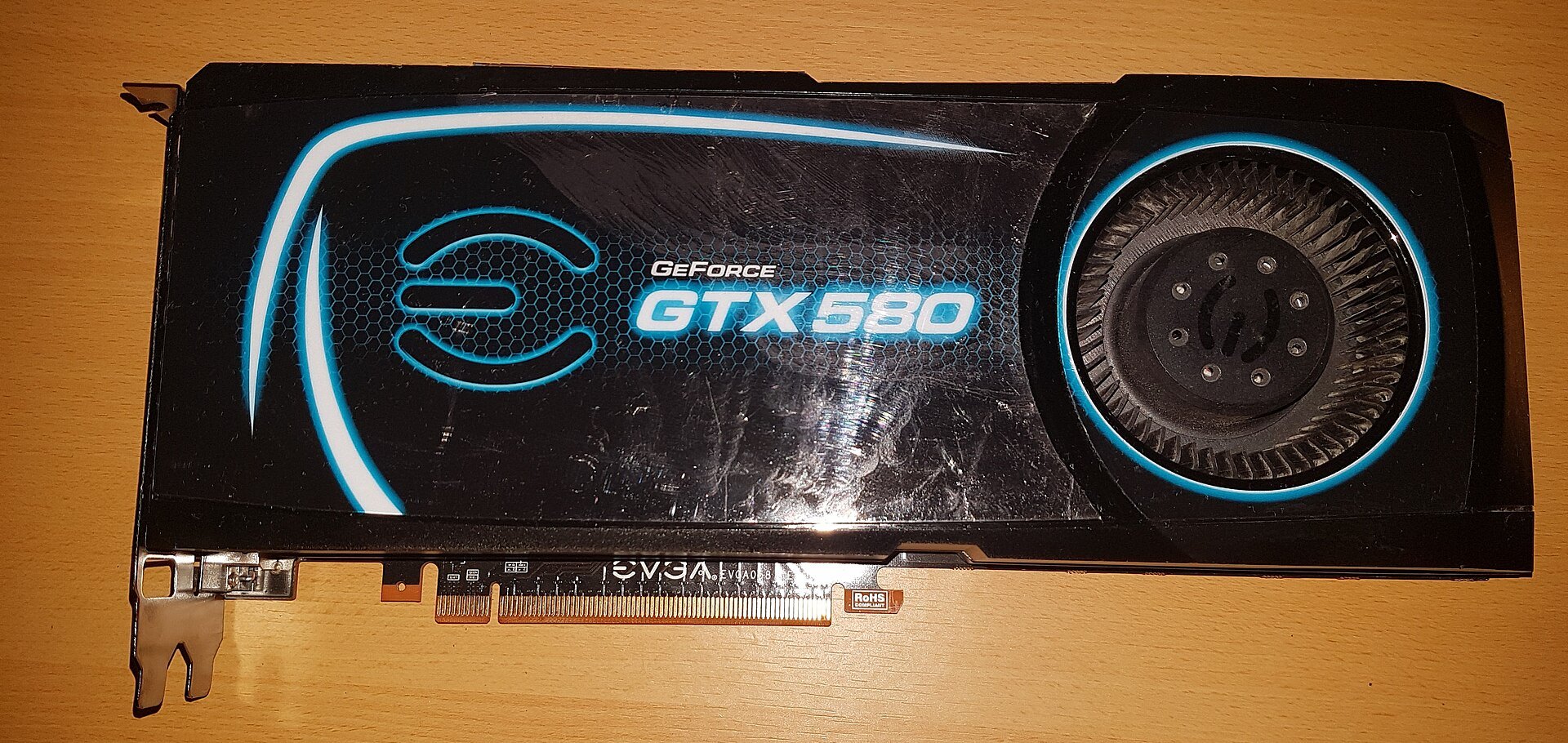
An NVIDIA GeForce GTX 580, late 2010: the card AlexNet was trained on, two of them. Photo: TheStriker, CC BY-SA 4.0, Wikimedia Commons.
SD2112 · AI IN DESIGN · WEEK 12
15
06 · 2012 · ALEXNET
Deep: the features are learned too.
30 September 2012: Krizhevsky, Sutskever and Hinton win the ImageNet challenge with an eight-layer network: 15.3% error against 26.2% for the runner-up, trained on 1.2 million labelled photos in about a week on two GTX 580s. The other entries ran on hand-crafted features; AlexNet grew its own from the pixels.
ImageNet: Fei-Fei Li, from 2006; 14 million images labelled by 49,000 Mechanical Turk workers in 167 countries.
SD2112 · AI IN DESIGN · WEEK 12
16
IHDE · POSTPHENOMENOLOGY AND TECHNOLOGICAL MEDIATION
Ihde: technology mediates our world.
Same camera. Different relations—depending on how you use it.
SD2112 · AI IN DESIGN · WEEK 12
17
WEEKS 4-6 / LANGUAGE, VISUAL AND AUDIO
Using AI, or incorporating AI.
WEEKS 4-6 / THE CREATIVE PROCESS
Using AI
AI as a tool in how you design: a brief drafted with a chatbot, a moodboard from a diffusion model, generative fill, layouts from Figma Make.
You stay the author. You become the curator, the briefer, the editor.
WEEKS 8-11 / THE PRODUCT
Incorporating AI
AI as a material in what you design: a feed, a recommendation, an assistant, a filter — the product decides something for each person, on its own.
You design a behaviour, not a picture. Data, bias, trust and accountability become design problems.
SD2112 · AI IN DESIGN · WEEK 12
18
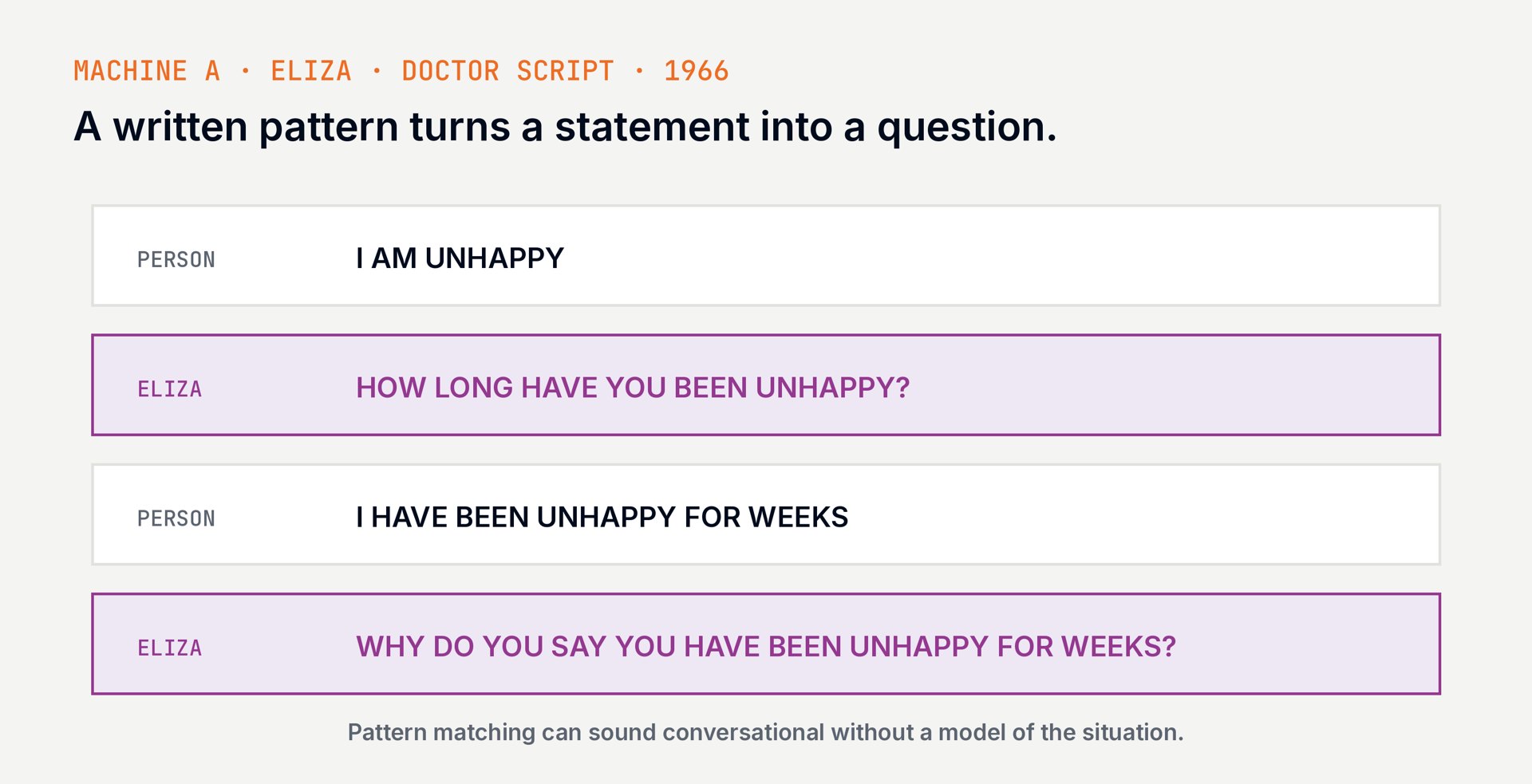
01 · ELIZA · 1966
Pattern matching can sound like understanding.
SD2112 · AI IN DESIGN · WEEK 12
19
02 · TRANSFORMER · CAUSAL SELF-ATTENTION · VASWANI ET AL. 2017 ↗
One sequence. Many positions working together.
SD2112 · AI IN DESIGN · WEEK 12
20
03 · QUESTION ANSWERING
Retrieve evidence, then write one answer.
01 · QUESTION
What do I need to know?
A visitor asks: “What time does the event start?”
02 · SEARCH
Find a source.
Search the official event page for the schedule.
03 · EVIDENCE
Select a passage.
Bring the relevant text and its URL into context.
04 · ANSWER
Write from evidence.
Answer once; mark details the source does not give.
SD2112 · AI IN DESIGN · WEEK 12
21
04 · ONE TOOL CALL · SEARCH
The model requests. The harness executes.
MACHINE B · REQUEST
“Search the event page.”
Tool: search
Query: exhibition start time
→
MACHINE A · EXECUTE
Check, then run.
The harness checks access, runs the tool, and records the result.
→
OBSERVATION
Return the evidence.
The page text and URL enter the model’s context.
A tool call is a structured request to software outside the model.
SD2112 · AI IN DESIGN · WEEK 12
22
CLIP · CONTRASTIVE LANGUAGE–IMAGE PRETRAINING
CLIP brings words and images into a shared space.
Matching pairs move closer; mismatched pairs move apart. CLIP does not generate an image.
SD2112 · AI IN DESIGN · WEEK 12
23
CLASSIC LATENT DIFFUSION · GENERATION
Generation turns new noise into an image.
The loop changes the latent, not the trained weights. Decode the final latent after the last update.
SD2112 · AI IN DESIGN · WEEK 12
24
CASE REFLECTION · SD2112 CO-CREATION
The brief emerged through choices.
01 · CLEAN MARK

02 · FOREST VARIANT

03 · BRIGHTER EDIT
→
→
A recognizable form to keep.
A setting and material enter.
A chosen refinement—not a finish.
The mark did not arrive fully formed. What entered the brief after seeing a candidate?
SD2112 · AI IN DESIGN · WEEK 12
25
CASE REFLECTION · SD2112 CO-CREATION
A better prompt was not always the right repair.
When the failure is in the transition, change the transition.
EARLIER ITERATIONS
Rejected montage.
Coherent origami repair.
Later, a burn to refine.
→
V8 · OBSERVED MISS
Flames inside the counter
and along the front edge.
→
V9 · TARGETED CHANGE
Replace only that transition:
front-facing, top → bottom.
Prompt repair? Reference repair? Workflow repair? Choose from the failure you can point to.
V9 delivered · review pending · not a claim of final acceptance
What did you delegate—and what did you insist on keeping?
SD2112 · AI IN DESIGN · WEEK 12
26
WEEKS 4-6 / MUSIC / MACHINE A
Musical choices in a sequencer
FIX
Tempo and bass
Set 100 BPM and repeat the same four-bar bass pattern.
VARY
Drum fills
At the end of each phrase, choose one of three fills or leave a rest.
LISTEN
Groove and space
Listen back. Does the fill lift the next phrase or crowd it?
SD2112 · AI IN DESIGN · WEEK 12
27
MACHINE B · TWO DOCUMENTED APPROACHES
A picture of sound. Or tokens of sound.
Historical Riffusion v1 and MusicGen illustrate mechanisms—not Suno’s unpublished internals.
SD2112 · AI IN DESIGN · WEEK 12
28
MACHINE B · SUNO
Your demo can guide a new musical proposal.
Supply your own exported demo as audio reference; describe the transformation.
Listen to the actual result: arrangement, pacing, timbre, voices and surprises.
Keep a candidate because it serves the brief—not because it arrived first.
Suno · generate through the configured Easel integration in the workshop.
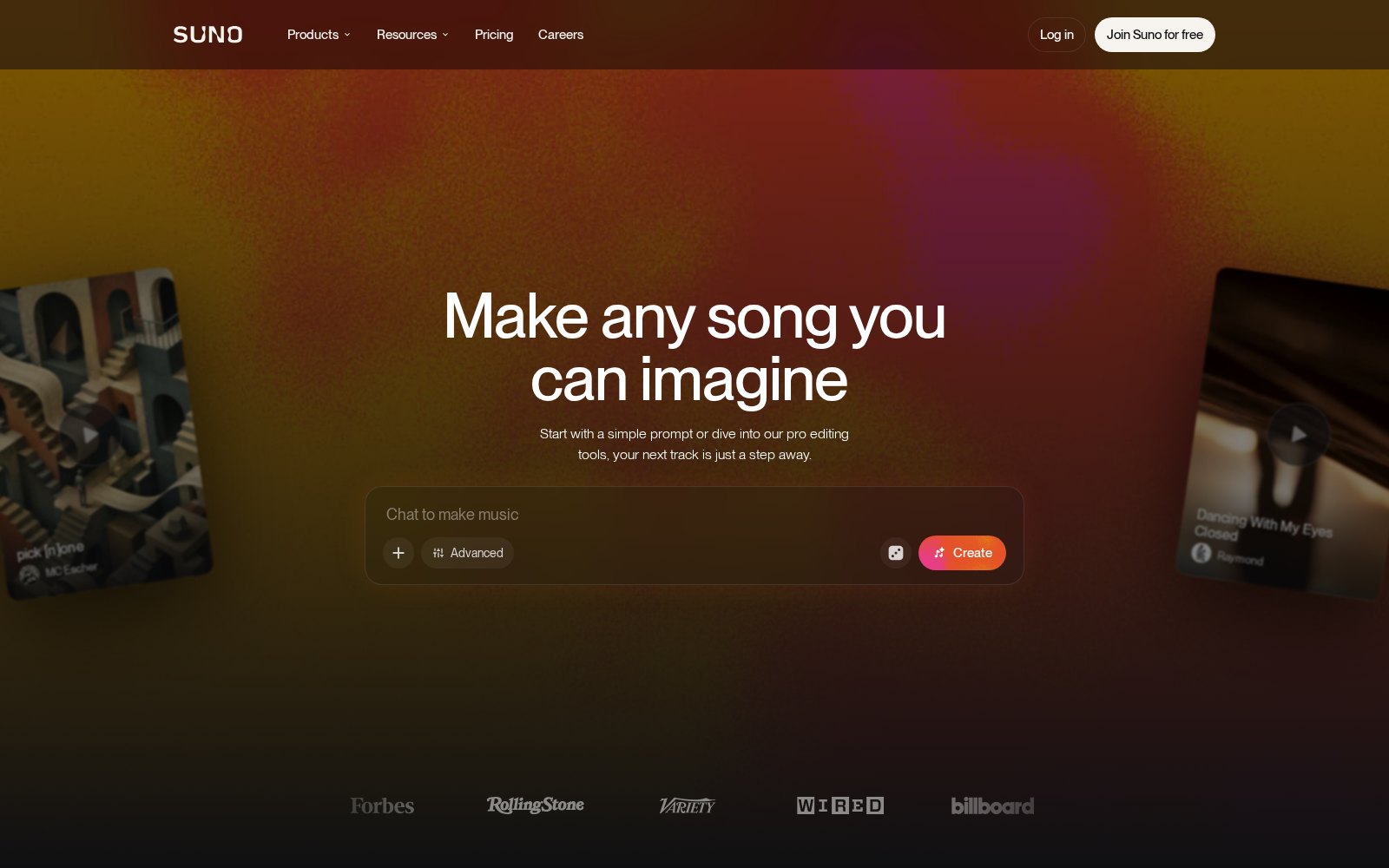
Public Suno landing page · 9 Oct 2026 · not the Easel interface.
SD2112 · AI IN DESIGN · WEEK 12
29
WEEKS 8-11 / AI INSIDE PRODUCTS / R8
People chose humans but rated AI higher.
WHAT THEY FOUND
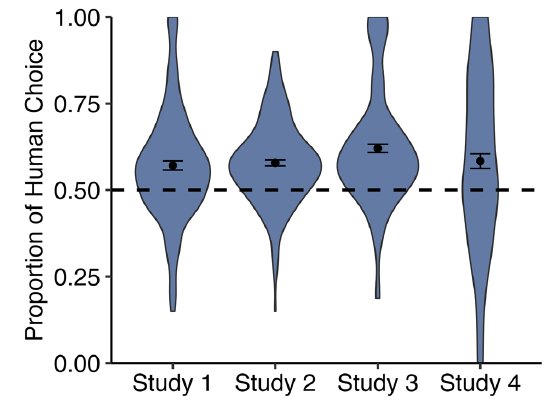
About 57-62% of choices went to humans, but AI replies generally rated higher for empathy and feeling heard.
WHAT IT DOES NOT SHOW
Sources were chosen, not randomly assigned. Brief tasks, not established relationships or clinical benefit.
FOR YOUR DESIGN
Should users choose their source?
Wenger et al. (2026), Fig. 1; published PDF p.5.
Cropped plot; CC BY 4.0. Dashed line = equal choice.
SD2112 · AI IN DESIGN · WEEK 12
30
AGENCY / CALIBRATED TRUST
Can the person disagree and act?
BEFORE
Know the boundary.
What does the system do? What evidence and data does it lack?
DURING
Question the answer.
Compare, correct, override or ask for a source before the decision matters.
AFTER
Leave or recover.
Keep an exit, a human route and a way to repair the consequences.
SD2112 · AI IN DESIGN · WEEK 12
31
FEEDBACK / CONCEPTUAL LOOP
The next screen changes the next data.
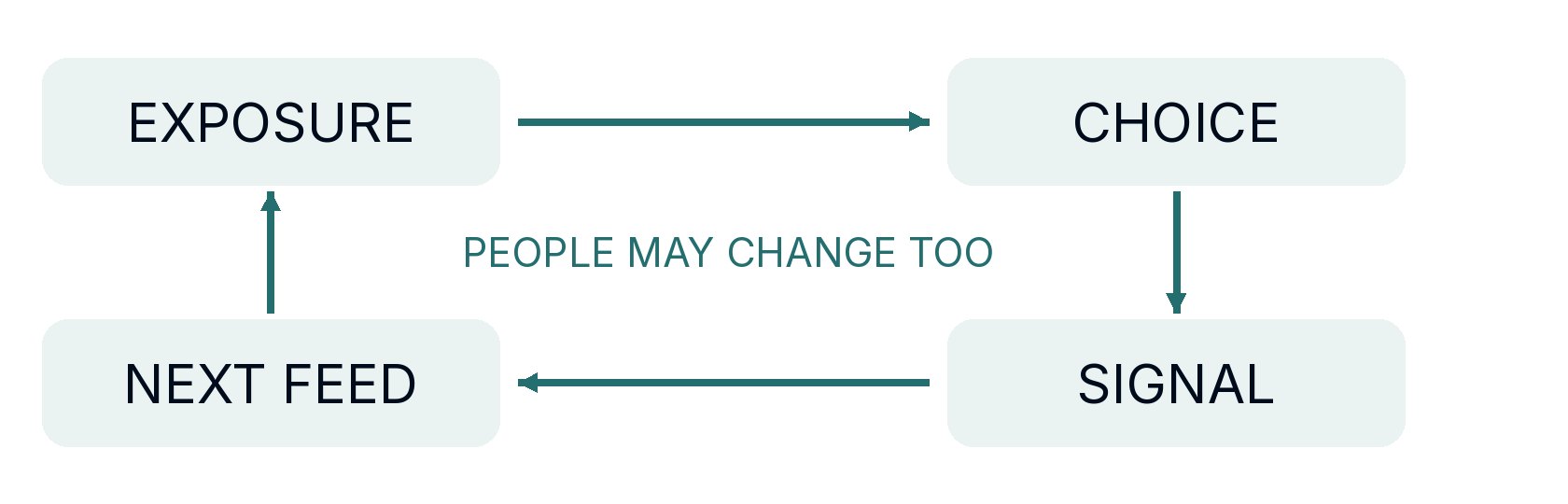
Possible feedback, not a measured universal law.
SD2112 · AI IN DESIGN · WEEK 12
32
READ THE SOURCE / RESULT + LIMIT / R4
Read the error row, not just the average.
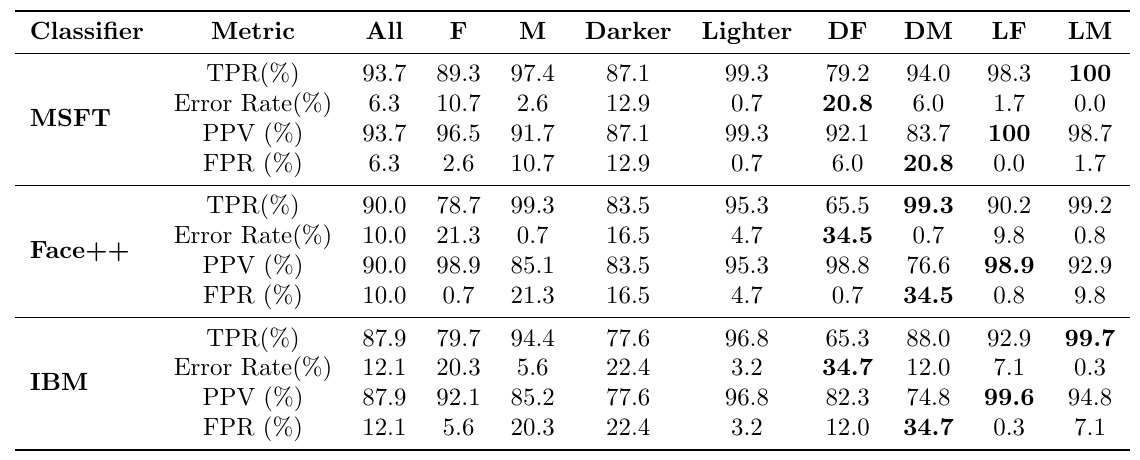
DF/DM: darker female/male.
LF/LM: lighter female/male.
IBM error: All 12.1%.
DF 34.7% / LM 0.3%.
Within-group rates.
2017 binary classification.
Not identification.
Causes/current rates unknown.
Table 4 / PDF p.9 / PMLR 2018
SD2112 · AI IN DESIGN · WEEK 12
33
WEEK 10 / DESIGN PROCESS
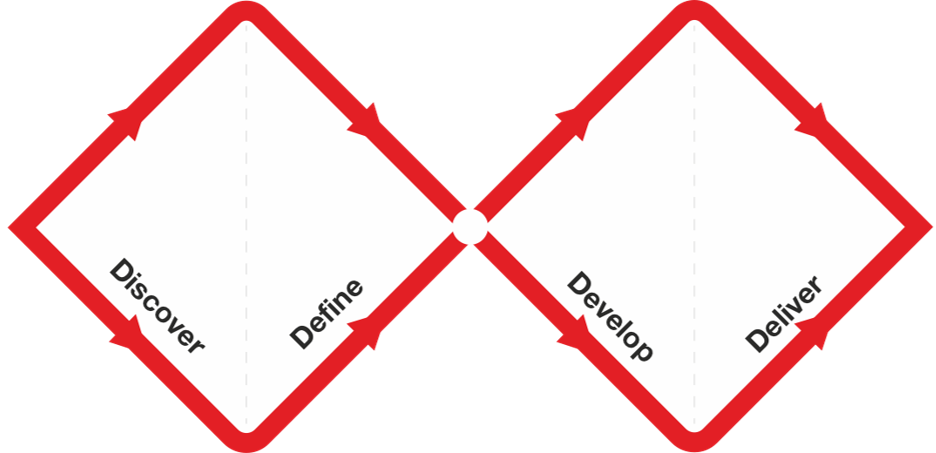
The Double Diamond
Discover and Define: understand the people and decide which problem the AI would address.
Develop and Deliver: compare interactions, test with people, and revise when the evidence changes.
SD2112 · AI IN DESIGN · WEEK 12
34
THE RESULT / D
Better ratings. More similar stories.
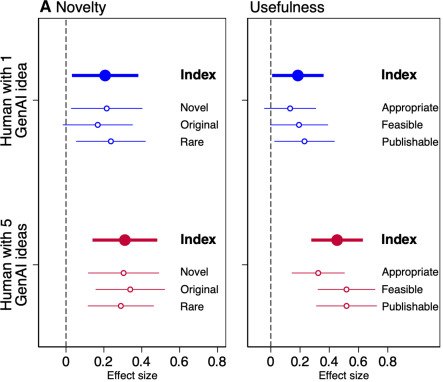
Doshi & Hauser (2024), Fig. 2A crop, CC BY 4.0. Dots: differences from human-only; bars: uncertainty.
MAIN FINDING
AI access raised average novelty and usefulness ratings. The two AI conditions also produced more similar stories.
LIMIT
A short writing task, not studio learning; similarity does not count cultural voices.
FOR YOUR DESIGN
Inspect the portfolio, not only its best item.
SD2112 · AI IN DESIGN · WEEK 12
35
COURSE RECAP / RECOMMENDERS, BIAS AND MEDIATION
Week 9 papers
Covington, Adams & Sargin (2016) / Deep Neural Networks for YouTube Recommendations
Gauthier et al. (2026) / The Political Effects of X's Feed Algorithm
Glickman & Sharot (2025) / How human-AI feedback loops alter human perceptual, emotional and social judgements
Buolamwini & Gebru (2018) / Gender Shades: Intersectional Accuracy Disparities in Commercial Gender Classification
Gebru et al. (2021) / Datasheets for Datasets
Mitchell (1980) / The Need for Biases in Learning Generalizations
Verbeek (2015) / Beyond Interaction: A Short Introduction to Mediation Theory
Van Den Eede (2011) / In Between Us: On the Transparency and Opacity of Technological Mediation
SD2112 · AI IN DESIGN · WEEK 12
36
COURSE RECAP / CURATION, AUTHORSHIP AND RESPONSIBILITY
Week 11 papers
Verbeek (2015) / Beyond Interaction: A Short Introduction to Mediation Theory
Doshi & Hauser (2024) / Generative AI Enhances Individual Creativity but Reduces the Collective Diversity of Novel Content
Gebru et al. (2021) / Datasheets for Datasets
Naqvi, He & Kaur (2025) / Catalyst for Creativity or a Hollow Trend?: A Cross-Level Perspective on The Role of Generative AI in Design
Joshi & Vogel (2026) / Interaction Techniques that Encourage Longer Prompts Can Improve Psychological Ownership when Writing with AI
U.S. Copyright Office (2025 report) / Copyright and Artificial Intelligence, Part 2: Copyrightability
SD2112 · AI IN DESIGN · WEEK 12
37
AGENCY + AUTHORSHIP / ORIGINAL CONTRIBUTION MAP
Trace four different decisions.
01 / GENERATE
Tool proposes.
AI writes a draft from the source text.
→
02 / SELECT
Designer chooses.
Choose a draft that names its source.
→
03 / REVISE
Designer edits.
Check the facts and rewrite the text.
→
04 / AUTHORISE
Team releases.
A person approves it for visitors.
AI drafts. People choose, edit and publish. Keep a record of that work.
SD2112 · AI IN DESIGN · WEEK 12
38
FOUR DISTINCT QUESTIONS
Feeling, work, permission, law.
01 / FEEL
Does it feel mine?
A reported feeling is not a copyright certificate.
02 / CONTRIBUTE
Who did what?
Credit sources, selection, edits and review.
03 / PERMISSION
May we reuse it?
Check rights and consent for the material.
04 / PROTECTION
What is protected?
Human expression is a separate legal question.
SD2112 · AI IN DESIGN · WEEK 12
39
12:07-12:13 / THE DESIGNER'S ROLE
Designers as curators
OUTPUTS
What makes the cut?
Choose what fits the brief. Be able to explain why you kept, edited or rejected a result.
TRAINING DATA
Whose work shapes it?
Look at whose work and whose perspective the examples represent. Check permissions and gaps.
HUMAN OVERSIGHT
Who has the last word?
Decide where an agent can act and when a person must review, intervene or stop it.
SD2112 · AI IN DESIGN · WEEK 12
40
12:13-12:19 / PROMPTS, RULES AND ACTIONS
Language as an interface
A phrase can specify a rule, as in a geometry instruction.
A description can steer a model toward a range of possible stories or images.
A music brief can do both. Fix the tempo and leave the arrangement open.
When the prompt can trigger an action, what is left implicit?
What should the interface show before a person lets the agent act?
SD2112 · AI IN DESIGN · WEEK 12
41
12:19-12:25 / CONTRIBUTION AND CREDIT
Fractional authorship
A team makes a poster with AI. Who shaped the idea, made the source material, selected the image, or edited the final composition?
Credit each contribution you can identify and describe what the model did. What should you disclose if the origins of training material are unclear?
Ask separately who gave permission to use the material and who holds rights in the finished work.
SD2112 · AI IN DESIGN · WEEK 12
42
12:25-12:27 / SYNTHESIS
What answer would you give Lovelace now?
One responsibility you will carry into your work.
One skill you will keep practising.
One question you still want to answer.
SD2112 · AI IN DESIGN · WEEK 12
43
COURSE ARCHIVE
Earlier slides
Week 1 / Lovelace and the opening question
Week 2 / Rules and specifications
Week 6 / Sound and representations
Week 8 / AI in the design process
SD2112 · AI IN DESIGN · WEEK 12
44
12:27-12:30 / ASK ME ANYTHING
Course AMA
Submit a short question about the course in ClassPoint.
A confusing concept, a case we discussed, or an ethical question you are still thinking about.
SD2112 · AI IN DESIGN · WEEK 12
45
12:30 / STUDENT FEEDBACK
ESFQ
SD2112 · AI IN DESIGN · WEEK 12
46
AFTER ESFQ / POSTER FAIR
Claim your poster-fair space
Open the Excalidraw room link shared in class.
One editor per group finds the exact group name and adds the project title.
Add a draft poster or placeholder. Landscape and portrait both work.
Add viewing links for the video and mediation brief when available.
Ask another group to find your space and open the links. Submit the final work in Canvas.
SD2112 · AI IN DESIGN · WEEK 12
47
GROUP PROJECT / ASK ME ANYTHING
Group project AMA
Submit a short question about your group project in ClassPoint.
Ask about your design or evidence, the poster, video, mediation brief, Excalidraw, or Canvas.
SD2112 · AI IN DESIGN · WEEK 12
48
POLYU SCHOOL OF DESIGN / SD2112 / WEEK 12
Course recap and discussion / ESFQ at 12:30
Ada Lovelace, Note G, 1843 — the first published program, for a machine that was never built
WEEKS 1-3 / CONCEPTS, MEDIATION AND AI PARADIGMS
Machine A: symbolic AI, 1956 onwards — definitions, logic, expert systems. Machine B: machine learning, 1958 / 1986 / 2012 — statistics over examples.
GIO’S COURSE EXTENSION · MACHINE A / MACHINE B / A+B
THE REQUEST: “TWO CIRCLES”
MACHINE A · EXPLICIT INSTRUCTIONS
MACHINE B · LEARNED INTERPRETATION
circle(200, 300, 150);
circle(400, 200, 250);
Historical Stable Diffusion samples.
Appearance suggested; count not enforced.
A+B: code sets the boundary; generated pixels supply the surface.
05 · HUMANS + CONCEPTS · MACHINES + CONCEPTS
Rule-based: classical theory + GOFAI, a definition a machine applies. Adaptive: prototype theory + connectionism, examples held in weights nobody can read. Your reflection is about this distinction.
03 · SOL LEWITT · SPLAT · 2001 · CAIXAFORUM BARCELONA
A wall drawing: LeWitt wrote the instruction and signed a certificate; assistants drew it on this wall, and can draw it again on any other. Photo: Ardfern, 2014, CC BY-SA 3.0, Wikimedia Commons.
04 · GEORG NEES · SCHOTTER · C. 1968
Twelve columns, twenty-two rows of squares. Each square is moved and turned by a random amount, and the amount grows with the row.
The sliders are the rule's two numbers: how much disorder, how many rows.
After Nees: our execution of his rule. Siemens 4004, ALGOL, Zuse Graphomat; the original print is 28 × 22 cm.
Open the live sketch › — click = new dice
04 · FRIEDER NAKE · WALK-THROUGH-RASTER · SERIES 2, 1–4 · 1966
Look first. What repeats? What never happens? Four prints from one program: ALGOL 60 on a Zuse Graphomat Z64. Victoria and Albert Museum, E.955-2008.
04 · WALK-THROUGH-RASTER · THE RULE IN FOUR STEPS
A grid, drawn column by column, top to bottom. Every cell is one of four things: empty, a bar, a cap, or both (10 PRINT had two). Two rules decide: a bar is more likely near the diagonal, and a cap can only be drawn under an empty cell, so a cell remembers one thing about the one above it. The empty space flows up and to the right, and every field of caps has gaps.
Nake, Walk-Through-Raster, series 2.1–4, 1966. Our reading of his rule: two yes/no decisions per cell, and one fact carried from the cell above.
02 · THE CLASSICAL THEORY · ARISTOTLE TO THE DICTIONARY
A definition is a list of properties a thing must have to belong: necessary, and together sufficient. Bachelor = man + unmarried.
Aristotle, pointing down at the things, is this theory: sort them by the properties they share and keep the ones that are necessary. Plato, pointing up, disagrees.
Plato and Aristotle, detail of Raphael's The School of Athens, 1509–1511. Public domain, Wikimedia Commons.
03 · PROTOTYPE THEORY
THE THEORY
Not a list of conditions but a picture of the typical case, and a distance from it. Membership is a degree: a robin is a very good bird, a penguin a poor one, and neither needs a definition.
THE GAIN
No definition to write: you judge a new thing by how much it resembles what you have seen. That is learning from examples, and it is why a machine can hold "chair" with no rule for it.
THE COST
Exceptions are hard: there are fewer examples at the edge, so the edge is unsure. And combining concepts is a puzzle: which properties of "pet" and "fish" does "pet fish" keep?
04 · ONE NEURON
Two inputs, two weights, a bias, a threshold. Multiply, add, compare with zero: that is the whole unit. Three numbers hold everything it knows. Rosenblatt, 1958, called it a perceptron; the shape and the size are the week-1 cup.
Rosenblatt, "The perceptron: a probabilistic model for information storage and organization in the brain", Psychological Review 65, 1958. In the html deck the neuron learns live, one example at a time.
Open the live sketch › — click = pause · C = start again
05 · GEOFFREY HINTON
A psychologist, like Rosenblatt. 1986: backpropagation, with Rumelhart and Williams, when almost nobody believed in networks.
2024: the Nobel Prize in Physics, with John Hopfield, "for foundational discoveries and inventions that enable machine learning with artificial neural networks".
Geoffrey Hinton at the 2024 Nobel Lectures, Stockholm University. Photo: Jay Dixit, CC BY-SA 4.0, Wikimedia Commons.
05 · BACKPROPAGATION · 1986 · THE PICTURE, LIVE
Nine pixels in, five and three hidden units, two out: nineteen units, 66 weights. Rumelhart, Hinton & Williams, "Learning representations by back-propagating errors", Nature 323, 1986.
Open the live sketch › — click = pause · C = start again
06 · GPUS · NOT ONLY FOR GAMING
A graphics processing unit does the same small calculation on millions of pixels at once: textures, shading, vertices, physics. Games needed that, and paid for twenty years of it.
The other school of AI finally had its engine.
An NVIDIA GeForce GTX 580, late 2010: the card AlexNet was trained on, two of them. Photo: TheStriker, CC BY-SA 4.0, Wikimedia Commons.
06 · 2012 · ALEXNET
30 September 2012: Krizhevsky, Sutskever and Hinton win the ImageNet challenge with an eight-layer network: 15.3% error against 26.2% for the runner-up, trained on 1.2 million labelled photos in about a week on two GTX 580s. The other entries ran on hand-crafted features; AlexNet grew its own from the pixels.
ImageNet: Fei-Fei Li, from 2006; 14 million images labelled by 49,000 Mechanical Turk workers in 167 countries.
IHDE · POSTPHENOMENOLOGY AND TECHNOLOGICAL MEDIATION
Same camera. Different relations—depending on how you use it.
WEEKS 4-6 / LANGUAGE, VISUAL AND AUDIO
WEEKS 4-6 / THE CREATIVE PROCESS
AI as a tool in how you design: a brief drafted with a chatbot, a moodboard from a diffusion model, generative fill, layouts from Figma Make.
You stay the author. You become the curator, the briefer, the editor.
WEEKS 8-11 / THE PRODUCT
AI as a material in what you design: a feed, a recommendation, an assistant, a filter — the product decides something for each person, on its own.
You design a behaviour, not a picture. Data, bias, trust and accountability become design problems.
01 · ELIZA · 1966
02 · TRANSFORMER · CAUSAL SELF-ATTENTION · VASWANI ET AL. 2017 ↗
Open the live sketch › — choose a step · click a token · replay training or generation
03 · QUESTION ANSWERING
01 · QUESTION
What do I need to know?
A visitor asks: “What time does the event start?”
02 · SEARCH
Find a source.
Search the official event page for the schedule.
03 · EVIDENCE
Select a passage.
Bring the relevant text and its URL into context.
04 · ANSWER
Write from evidence.
Answer once; mark details the source does not give.
04 · ONE TOOL CALL · SEARCH
MACHINE B · REQUEST
Tool: search
Query: exhibition start time
MACHINE A · EXECUTE
The harness checks access, runs the tool, and records the result.
OBSERVATION
The page text and URL enter the model’s context.
A tool call is a structured request to software outside the model.
CLIP · CONTRASTIVE LANGUAGE–IMAGE PRETRAINING
Matching pairs move closer; mismatched pairs move apart. CLIP does not generate an image.
CLASSIC LATENT DIFFUSION · GENERATION
The loop changes the latent, not the trained weights. Decode the final latent after the last update.
CASE REFLECTION · SD2112 CO-CREATION
01 · CLEAN MARK
02 · FOREST VARIANT
03 · BRIGHTER EDIT
A recognizable form to keep.
A setting and material enter.
A chosen refinement—not a finish.
The mark did not arrive fully formed. What entered the brief after seeing a candidate?
CASE REFLECTION · SD2112 CO-CREATION
When the failure is in the transition, change the transition.
EARLIER ITERATIONS
Rejected montage.
Coherent origami repair.
Later, a burn to refine.
V8 · OBSERVED MISS
Flames inside the counter
and along the front edge.
V9 · TARGETED CHANGE
Replace only that transition:
front-facing, top → bottom.
Prompt repair? Reference repair? Workflow repair? Choose from the failure you can point to.
V9 delivered · review pending · not a claim of final acceptance
What did you delegate—and what did you insist on keeping?
WEEKS 4-6 / MUSIC / MACHINE A
FIX
Set 100 BPM and repeat the same four-bar bass pattern.
VARY
At the end of each phrase, choose one of three fills or leave a rest.
LISTEN
Listen back. Does the fill lift the next phrase or crowd it?
MACHINE B · TWO DOCUMENTED APPROACHES
Historical Riffusion v1 and MusicGen illustrate mechanisms—not Suno’s unpublished internals.
MACHINE B · SUNO
Supply your own exported demo as audio reference; describe the transformation.
Listen to the actual result: arrangement, pacing, timbre, voices and surprises.
Keep a candidate because it serves the brief—not because it arrived first.
Suno · generate through the configured Easel integration in the workshop.
Public Suno landing page · 9 Oct 2026 · not the Easel interface.
WEEKS 8-11 / AI INSIDE PRODUCTS / R8
WHAT THEY FOUND
About 57-62% of choices went to humans, but AI replies generally rated higher for empathy and feeling heard.
WHAT IT DOES NOT SHOW
Sources were chosen, not randomly assigned. Brief tasks, not established relationships or clinical benefit.
FOR YOUR DESIGN
Should users choose their source?
Wenger et al. (2026), Fig. 1; published PDF p.5.
Cropped plot; CC BY 4.0. Dashed line = equal choice.
AGENCY / CALIBRATED TRUST
BEFORE
What does the system do? What evidence and data does it lack?
DURING
Compare, correct, override or ask for a source before the decision matters.
AFTER
Keep an exit, a human route and a way to repair the consequences.
FEEDBACK / CONCEPTUAL LOOP
Possible feedback, not a measured universal law.
READ THE SOURCE / RESULT + LIMIT / R4
DF/DM: darker female/male.
LF/LM: lighter female/male.
IBM error: All 12.1%.
DF 34.7% / LM 0.3%.
Within-group rates.
2017 binary classification.
Not identification.
Causes/current rates unknown.
Table 4 / PDF p.9 / PMLR 2018
WEEK 10 / DESIGN PROCESS
Discover and Define: understand the people and decide which problem the AI would address.
Develop and Deliver: compare interactions, test with people, and revise when the evidence changes.
Week 8 / AI in the design process
THE RESULT / D
Doshi & Hauser (2024), Fig. 2A crop, CC BY 4.0. Dots: differences from human-only; bars: uncertainty.
MAIN FINDING
AI access raised average novelty and usefulness ratings. The two AI conditions also produced more similar stories.
LIMIT
A short writing task, not studio learning; similarity does not count cultural voices.
FOR YOUR DESIGN
Inspect the portfolio, not only its best item.
COURSE RECAP / RECOMMENDERS, BIAS AND MEDIATION
Covington, Adams & Sargin (2016) / Deep Neural Networks for YouTube Recommendations
Gauthier et al. (2026) / The Political Effects of X's Feed Algorithm
Glickman & Sharot (2025) / How human-AI feedback loops alter human perceptual, emotional and social judgements
Buolamwini & Gebru (2018) / Gender Shades: Intersectional Accuracy Disparities in Commercial Gender Classification
Gebru et al. (2021) / Datasheets for Datasets
Mitchell (1980) / The Need for Biases in Learning Generalizations
Verbeek (2015) / Beyond Interaction: A Short Introduction to Mediation Theory
Van Den Eede (2011) / In Between Us: On the Transparency and Opacity of Technological Mediation
COURSE RECAP / CURATION, AUTHORSHIP AND RESPONSIBILITY
Verbeek (2015) / Beyond Interaction: A Short Introduction to Mediation Theory
Doshi & Hauser (2024) / Generative AI Enhances Individual Creativity but Reduces the Collective Diversity of Novel Content
Gebru et al. (2021) / Datasheets for Datasets
Naqvi, He & Kaur (2025) / Catalyst for Creativity or a Hollow Trend?: A Cross-Level Perspective on The Role of Generative AI in Design
Joshi & Vogel (2026) / Interaction Techniques that Encourage Longer Prompts Can Improve Psychological Ownership when Writing with AI
U.S. Copyright Office (2025 report) / Copyright and Artificial Intelligence, Part 2: Copyrightability
AGENCY + AUTHORSHIP / ORIGINAL CONTRIBUTION MAP
01 / GENERATE
Tool proposes.
AI writes a draft from the source text.
02 / SELECT
Designer chooses.
Choose a draft that names its source.
03 / REVISE
Designer edits.
Check the facts and rewrite the text.
04 / AUTHORISE
Team releases.
A person approves it for visitors.
AI drafts. People choose, edit and publish. Keep a record of that work.
FOUR DISTINCT QUESTIONS
01 / FEEL
Does it feel mine?
A reported feeling is not a copyright certificate.
02 / CONTRIBUTE
Who did what?
Credit sources, selection, edits and review.
03 / PERMISSION
May we reuse it?
Check rights and consent for the material.
04 / PROTECTION
What is protected?
Human expression is a separate legal question.
12:07-12:13 / THE DESIGNER'S ROLE
OUTPUTS
Choose what fits the brief. Be able to explain why you kept, edited or rejected a result.
TRAINING DATA
Look at whose work and whose perspective the examples represent. Check permissions and gaps.
HUMAN OVERSIGHT
Decide where an agent can act and when a person must review, intervene or stop it.
12:13-12:19 / PROMPTS, RULES AND ACTIONS
A phrase can specify a rule, as in a geometry instruction.
A description can steer a model toward a range of possible stories or images.
A music brief can do both. Fix the tempo and leave the arrangement open.
When the prompt can trigger an action, what is left implicit?
What should the interface show before a person lets the agent act?
12:19-12:25 / CONTRIBUTION AND CREDIT
A team makes a poster with AI. Who shaped the idea, made the source material, selected the image, or edited the final composition?
Credit each contribution you can identify and describe what the model did. What should you disclose if the origins of training material are unclear?
Ask separately who gave permission to use the material and who holds rights in the finished work.
12:25-12:27 / SYNTHESIS
COURSE ARCHIVE
Week 1 / Lovelace and the opening question
Week 2 / Rules and specifications
Week 3 / Learning from examples
Week 5 / Technological mediation
Week 6 / Sound and representations
Week 8 / AI in the design process
12:27-12:30 / ASK ME ANYTHING
ClassPoint · short answer — answer on the projector
12:30 / STUDENT FEEDBACK
AFTER ESFQ / POSTER FAIR
Open the Excalidraw room link shared in class.
One editor per group finds the exact group name and adds the project title.
Add a draft poster or placeholder. Landscape and portrait both work.
Add viewing links for the video and mediation brief when available.
Ask another group to find your space and open the links. Submit the final work in Canvas.
GROUP PROJECT / ASK ME ANYTHING
ClassPoint · short answer — answer on the projector